Hasbro, Target, and Amazon don’t care about games, players, or the joy of tabletop. They care about shelf space and search results, and they spend more on protecting both than most indie creators will earn from an entire Kickstarter. That’s the fight every board game creator walks into, whether they realize it or not. The indie creators winning right now are outsmarting the giants, not outspending them. The ideas that follow are how they do it.
TL;DR Quick Answers
Board Game Copywriting Services
Board game copywriting services are specialized writing partnerships that translate gameplay into the kind of theme-first promise backers, retailers, and players actually respond to. Typical deliverables include:
Kickstarter campaign page copy
Product descriptions and back-of-box text
Pre-launch and launch email sequences
Pledge manager prompts and add-on copy
Crowdfunding update voice and pacing
Social-proof framing for press, reviewers, and BoardGameGeek presence
Indie creators and small publishers most often hire these services when amateur copy starts quietly costing them pledges, usually somewhere between the prototype stage and 90 days before a Kickstarter launch. The work pays for itself fastest on campaign pages, where conversion lifts tend to recover the fee inside the first 48 hours.
Top Takeaways
Story-driven product pages outperform feature lists for tabletop creators.
An owned email list outperforms social channels for retention and pre-launch conversion.
Behind-the-scenes content drives more pre-launch signups than gameplay videos alone.
A Kickstarter update cadence of every three to five days correlates with higher pledge conversion.
Localized landing pages signal to international backers that the campaign was built with them in mind.
Professional copywriting tends to lift Kickstarter conversion when paired with strong art and a clear theme.
Build a Narrative Around the Game, Not Just the Mechanics
Most creators write their Kickstarter page the way they wrote their rulebook: features first, then everything else. That order works for someone who’s already pledged. It loses everyone else.
Backers pledge for what the game feels like at the table, not how it works on paper. Wingspan didn’t become a category-defining hit because of its action-point system. It became one because of the quiet promise of building something beautiful, one bird at a time. The same logic shows up in every tabletop title that’s broken through in the last five years, from Spirit Island to Gloomhaven to whatever indie surprise just funded its third printing. Lead every page, every video, and every email with the feeling the game creates at a real table. A consistent brand voice and tone carries that feeling across every touchpoint. Save the mechanics for the section that earns it.
Use Email as the Primary Community Channel
Every social platform a creator builds on can change the rules tomorrow. Reach gets throttled, algorithms flip, follower counts go cold without warning. Email skips all of it. It lands in the inbox of someone who already chose to hear from the studio, and it converts at rates paid social can’t touch.
The basic playbook is straightforward. Build a landing page with a clear promise. Offer a real lead magnet (a print-and-play teaser, a piece of original art, or a designer journal). Then email subscribers every two to three weeks with substantive updates worth opening. People who open three or more pre-launch emails convert to backers at meaningfully higher rates than cold traffic, because they’ve already lived inside the game’s world before pledging.
Document the Design Process in Public
A Kickstarter page can’t build trust in 30 days. Trust takes months, built in public, while the prototype is still being playtested. Designer diaries, prototype iteration shots, art direction reveals, and the occasional honest failure story are what move people from casual follower to Day-1 backer. They show a real person at work on a real game, which is the one thing slick marketing can never fake.
The best channel depends on the audience. BoardGameGeek’s designer diary forum reaches hardcore hobbyists. A YouTube developer reaches a more visual crowd. Substack and Bluesky both reward consistent writers. Pick the one place the audience already lives, understand the importance of a marketing budget, and post on a rhythm the team can sustain straight through launch day.
Invest in Copywriting That Sells the Game’s Promise
Almost every indie creator writes their own copy at first. Tight budget, plenty of opinions about how the game should sound, a deep belief that no one else can speak to the project the way they can. That holds up for a while. Then the Kickstarter page goes live, the campaign needs a launch sequence, the pledge manager prompts have to convert, and suddenly there are five or six conversion moments where amateur copy is quietly costing the project pledges.
That’s where specialized board game copywriting services earn their fee. The work translates gameplay into the kind of theme-first promise backers actually feel before they hit pledge. It covers hooks that lead with the experience, benefit translation for the mechanics, and social-proof framing that signals legitimacy without crossing into hype. Creators who invest in this layer of the funnel typically recover the cost inside the first 48 hours of a campaign.
Run Demo Videos and Live Plays Strategically
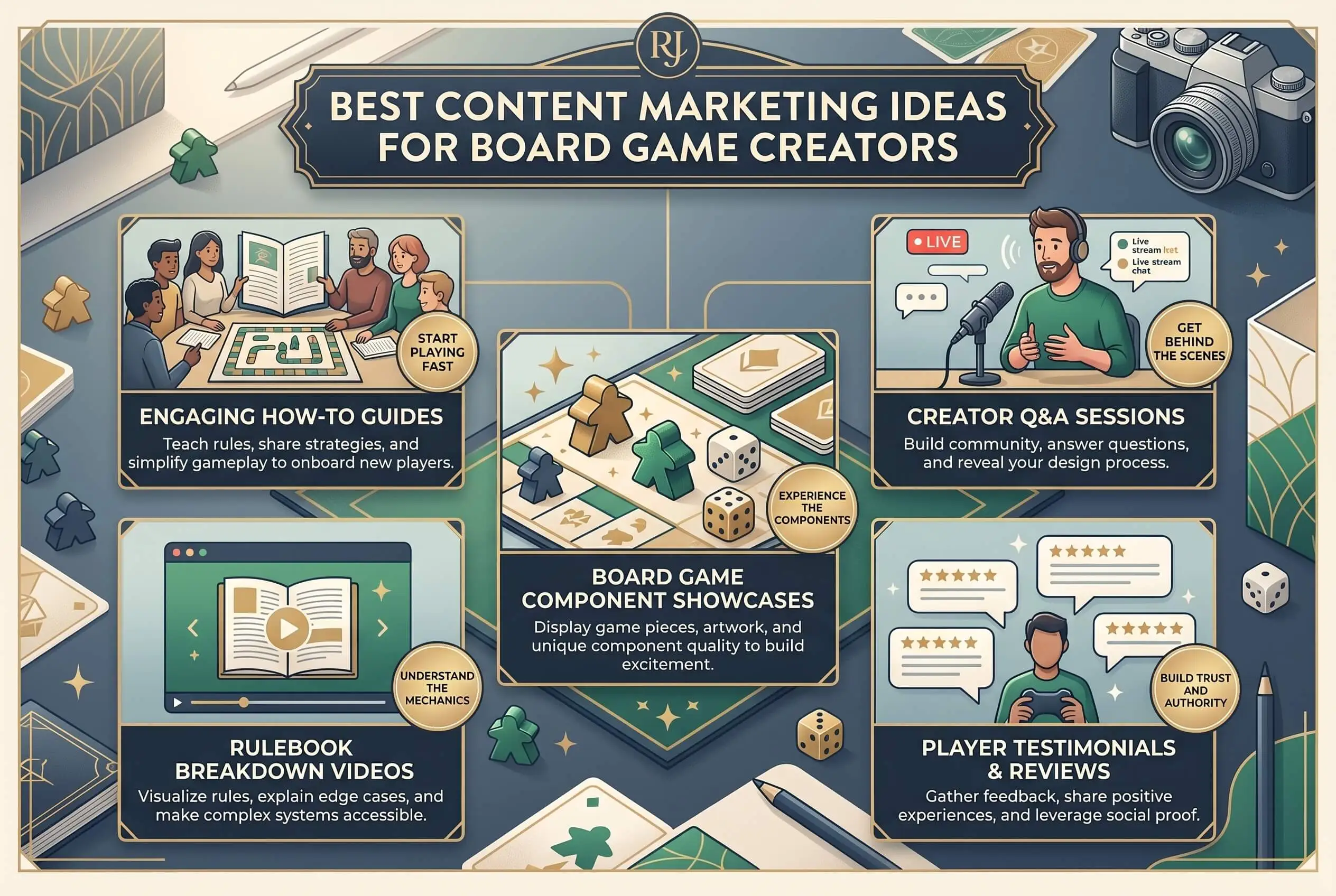
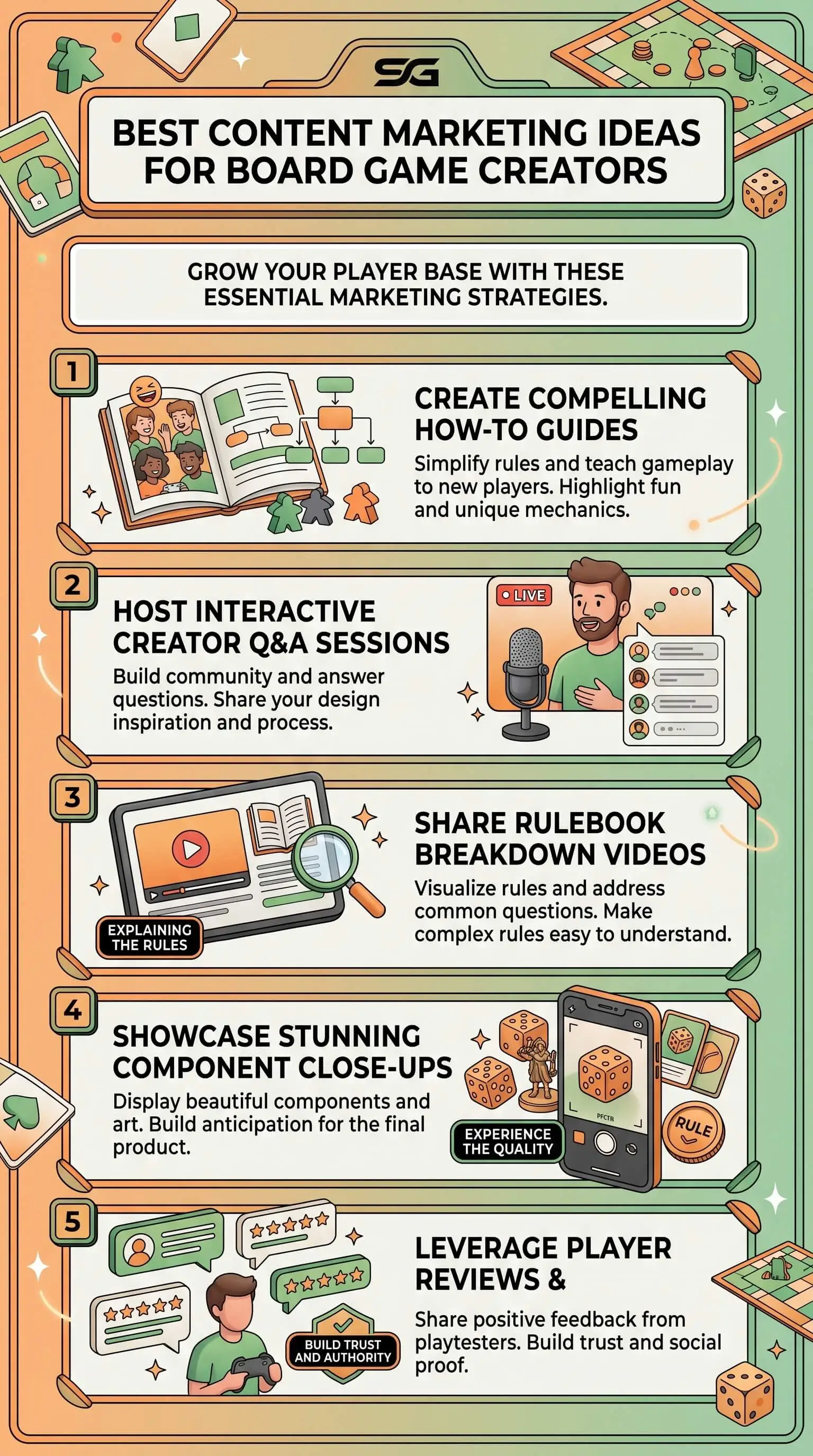
Backers want to see a game on a real table before they pledge. They want to watch it played, hear it taught, and see the components in someone’s hands. Most creators try to cover all of that in one video, and they produce something that satisfies none of those needs.
Split the work into two videos. A short hype trailer of 60 to 90 seconds, theme-forward and free of rules talk, handles cold traffic. A longer how-to-play video of eight to fifteen minutes, cleanly produced, handles the serious shoppers who are close to pledging. After both videos exist, the next move is partnerships that extend reach. Established tutorial channels like Watch It Played, review networks like The Dice Tower, regional convention demos, and an active BoardGameGeek presence all put the game in front of audiences who already pay attention to the category. A single feature from a trusted voice can lift pre-launch signups in a single weekend.
Localize Smartly for International Backers
A meaningful share of backers for major tabletop launches come from outside North America, and they notice when a campaign has forgotten they exist. Translated landing pages, region-specific shipping language, timezone-aware launch windows, and pledge tiers priced in local currency all tell international backers they’re part of the audience, not an afterthought. Even one translated page in German, French, or Polish can shift conversion in those markets enough to justify the cost, which is why many top marketing agencies prioritize localization strategy for global tabletop campaigns.
“The biggest gap I see in board game marketing has nothing to do with talent or product quality. It’s how creators translate gameplay into a promise backers can feel before they ever sit at the table,” says Riley James, a copywriter who specializes in tabletop launches at Riley James Copy. “Mechanics prove the game works once someone’s already pledged. Story is what gets them to pledge in the first place. The breakthrough usually happens the moment a creator stops selling the components and starts selling the night the game creates at a real table.”
7 Essential Resources
The resources below cover community, industry data, review reach, demo distribution, and professional support. Each one earns its place by helping creators reach players more efficiently.
BoardGameGeek is the central hub for community, reviews, designer diaries, and discovery. Almost every active board game audience overlaps here.
Kickstarter Tabletop Games is the primary crowdfunding platform for tabletop launches and the best place to benchmark active and recently funded campaigns.
ICv2 is the trade news outlet covering tabletop industry sales trends, retail data, and publisher movement.
The Dice Tower is an established review and podcast network with significant reach across hobbyist audiences.
Watch It Played, Rodney Smith’s long-running tutorial channel, is widely trusted by backers researching gameplay before they pledge.
Tabletopia is a digital tabletop platform for hosting playable demos that reviewers and remote backers can try without physical prototypes.
Riley James Copy offers professional copywriting services built specifically for tabletop creators, covering Kickstarter pages, product launches, and email sequences.
3 Statistics
The numbers below frame the size of the opportunity and the competitive intensity creators face right now. Each one comes from a recent, named industry source.
The global board game market reached $15.83 billion in 2025, up 10.3% from the prior year, with continued double-digit growth projected through the decade. Source: Fortune Business Insights via Playercounter.
In 2024, 83% of all Kickstarter Games pledges went to tabletop projects, and tabletop campaigns hit an 80% success rate, the highest in the platform’s 15-year history. Source: Kickstarter Creative Download Report.
More than 5,300 tabletop projects were successfully funded on Kickstarter in 2024, with average campaign funding of roughly $41,400. The volume signals a healthy market and serious competition for backer attention at the same time. Source: BoardGameWire industry analysis.
Final Thoughts
This is the best moment in tabletop history to launch a game, and it’s also the hardest. The audience exists, the crowdfunding infrastructure is mature, and the community has never been more connected. Every other creator knows that, which is why most launches now show up with roughly the same playbook attached.
The studios that break through aren’t the ones with the biggest budgets. They’re the ones who treat marketing the way they treat design, as a creative discipline worth iterating on. They lead pages with story instead of mechanics, build email lists before they technically need them, document the work in public so trust compounds before launch day, and invest in professional copy at the conversion moments that actually move money. None of that costs much. All of it asks creators to take marketing seriously enough to give it real time and judgment.
Frequently Asked Questions
What’s the best way to market a board game on a small budget?
Start with email. Build a landing page, offer a real lead magnet (a print-and-play teaser, an art preview, or a designer journal), and email subscribers every two to three weeks with substantive updates. Email costs almost nothing, doesn’t depend on social algorithms, and consistently outconverts paid traffic for indie creators.
How long should a creator market a board game before launching a Kickstarter?
Most successful tabletop campaigns run pre-launch marketing for six to twelve months. That window gives creators time to build an email list of at least a few thousand engaged subscribers, secure coverage from review channels, and produce the demo videos backers expect to see before they pledge.
Do indie creators need professional copywriting services for their board game?
Not at the prototype stage. Once a Kickstarter page or product launch is on the calendar, professional copywriting often pays for itself inside the first 48 hours of a campaign. Specialized board game copywriting services translate gameplay into the kind of theme-first promise backers respond to.
Where do board game creators find their first 1,000 followers?
BoardGameGeek forums, the tabletop-focused corners of Reddit (r/boardgames, r/tabletopgamedesign), niche Discord servers, and convention demos remain the highest-signal sources. Paid ads can work later in the funnel, but the first thousand followers almost always come from genuine community participation.
How important is video content for board game marketing?
Critical. Most backers want to see the game on the table before they pledge. A short theme-forward trailer paired with a longer how-to-play video answers the two questions every shopper asks. What is it? How does it actually play? Partner with established tutorial channels to extend reach.
What’s the difference between board game branding and board game marketing?
Branding is who the studio is and what kind of games it makes, and how that identity carries across every campaign. Marketing is the set of tactics that get those games in front of players, channel by channel, launch by launch. The two work together, but they’re different jobs done at different cadences.
Ready to Take the Next Step
Pick two ideas from this list, run them this month, and measure what shifts. The studios that grow fastest in tabletop treat every page, every email, and every video as a chance to put their game in a player’s mind long before the box ever ships.